
DESTINATION GUIDE
Tsavo East National Park: Wildlife, Red Elephants and Safari Guide
Tsavo East National Park is one of Kenya's great wilderness destinations, known for its red-earth landscapes, wide savannahs and elephants that often appear coated in the park's distinctive rust-coloured dust.
For travellers staying in Watamu, Malindi or elsewhere along the Kenya coast, Tsavo East offers an opportunity to exchange the Indian Ocean for an entirely different landscape of rivers, open plains, acacia woodland and wildlife.
The park is rewarding in its own right, but it can also form part of a longer journey through Tsavo West, Amboseli and southern Kenya.
Where Is Tsavo East National Park?
Tsavo East lies in southeastern Kenya, inland from the Indian Ocean coast and alongside the Nairobi–Mombasa transport corridor.
Established in April 1948, the park covers approximately 13,747 square kilometres, making it Kenya's largest national park. Together with neighbouring Tsavo West, it forms part of the extensive Tsavo conservation landscape.
Its size is part of its appeal. Wildlife moves through broad stretches of savannah, semi-arid bushland, seasonal watercourses and riverine vegetation, giving visitors a strong sense of the scale of Kenya's natural environment.
Landscape and Geography
Tsavo East is often described as an open, dry park, but its landscape is more varied than that description suggests. Much of the park consists of reddish plains, grassland and acacia scrub.
Rivers and water sources introduce greener corridors that support different plants and animals. The Galana River is one of its defining geographical features, while ancient volcanic formations and rocky outcrops interrupt the plains.
Compared with the more mountainous and wooded Tsavo West, Tsavo East generally offers broader horizons and extensive open country.
What Makes Tsavo East Special?
The Red Elephants of Tsavo
Elephants are among the park's most recognisable animals. Their reddish appearance comes from dust and soil that settles on their skin during dust bathing and other natural behaviour; they are African elephants, not a separate red-coloured species.
Watching elephants move across the plains, gather near water or interact within family groups can be memorable. Their movements depend on rainfall, available water and vegetation, so no particular encounter is guaranteed.
The Galana River
The Galana River creates an important ribbon of life through Tsavo East's dry landscapes. Vegetation along the river provides habitat for birds and other wildlife, while the water supports animals in the surrounding ecosystem.
A safari near the river offers greener banks, rocky stretches and changing concentrations of wildlife compared with the more open plains.
The Yatta Plateau
The Yatta Plateau is an extraordinary geological feature associated with one of the world's longest lava flows. It reflects volcanic activity that shaped the wider Tsavo landscape long before the national park was established.
Its scale is best appreciated as part of the surrounding scenery rather than as an attraction that every safari can reach in full.
Lugard Falls
Lugard Falls is a striking section of the Galana River where water passes through sculpted rock formations and narrow channels. It is better understood as rapids and unusual river-worn formations than as a single towering waterfall.
It can be included in suitable game-drive routes, depending on the entrance used, available time and road conditions. Visitors should follow their guide's instructions near the river and remain within designated areas.
Mudanda Rock
Mudanda Rock is a long rocky outcrop rising above the surrounding landscape. It acts as a natural water catchment, feeding a waterhole below that can attract elephants and other animals, particularly in drier conditions.
The rock provides a distinctive viewpoint over nearby plains. Mudanda Rock and Aruba Dam are separate attractions, although both are associated with wildlife gathering around water.
Aruba Dam
Aruba Dam is an established wildlife-viewing area in Tsavo East. Its water can attract elephants, buffalo, birds and other animals, though concentrations vary with rainfall and other water sources.
Wildlife in Tsavo East National Park
Elephants, Buffalo and Plains Animals
Tsavo East supports African elephants, buffalo, zebras, giraffes, antelopes and other herbivores adapted to its habitats. Visitors may encounter herds of buffalo, grazing zebras, giraffes browsing among trees and smaller antelopes moving through the bush.
Species such as lesser kudu and fringe-eared oryx add interest to the park's dry-country wildlife. What visitors see depends on the route, season, time of day and natural movements of the animals.
Lions and Other Predators
Tsavo has a long association with lions, including the historical story of the railway construction period. Some male lions in the wider Tsavo region are known for reduced or less prominent manes, although appearance varies between individuals.
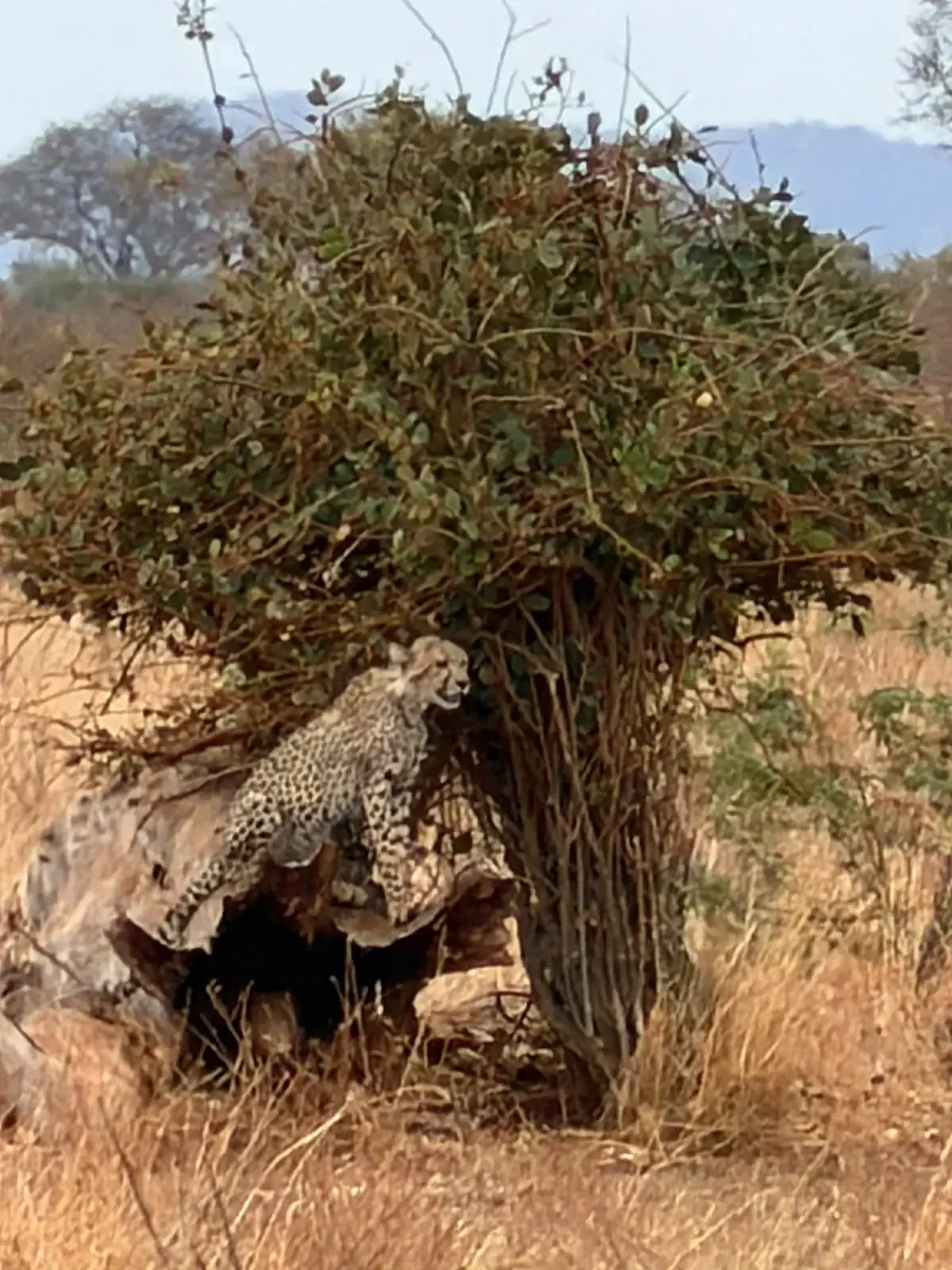
Lions, cheetahs, leopards, spotted hyenas and other predators are recorded in the park. They are not equally easy to find: leopards are usually more elusive and cheetah sightings depend on suitable habitat and luck.
A rewarding safari is not measured solely by how many predators are seen.
Rare and Conservation-Sensitive Wildlife
Tsavo East is part of a larger conservation landscape supporting species of special ecological importance. Kenya Wildlife Service identifies the critically endangered hirola among wildlife associated with the park.
Rare species should not be promoted as normal or likely tourist sightings; their presence is better understood in the context of conservation and habitat protection.
Birdwatching
Kenya Wildlife Service reports more than 500 bird species in Tsavo East. Birdwatchers can look for birds of prey, hornbills, starlings, ostriches, waterbirds and species associated with woodland, grassland and river habitats.
The Galana River and other water sources offer opportunities to observe birdlife alongside mammals. Seasonal rainfall and migratory movements influence what is present and how easily it can be observed.
Best Time to Visit Tsavo East
Tsavo East can be visited throughout the year, but conditions change with rainfall.
January to February
These are often relatively dry months, with warm weather and open landscapes. Wildlife may be easier to locate around reliable water sources, although temperatures can be high.
March to May
The long-rain period generally brings greener vegetation and more temporary water. Animals may spread across wider areas, and some roads can become muddy or difficult. The changing colours can be rewarding for landscapes, birds and photography.
June to October
This is generally a drier period, often favourable for game viewing. As vegetation becomes less dense and water sources become more important, animals may be easier to observe in some areas. Conditions can also be dusty and accommodation demand may be greater.
November to December
The short rains may bring fresh vegetation, seasonal bird activity and changing light across the plains. Rainfall is variable, and road conditions should be checked before travelling.
There is no single perfect month for every visitor. The best time depends on wildlife interests, travel dates, accommodation preferences and the wider safari route.
Where to Stay in and Around Tsavo East
Tsavo East offers established safari lodges, tented camps and public camping options. Accommodation choice affects not only comfort and budget but also the areas of the park that can be explored conveniently.
A property inside the national park is not necessarily the best option for every itinerary. Some accommodation outside the boundary offers practical access from Voi or the coast.
Lodges and Camps Inside Tsavo East
Ashnil Aruba Lodge — within the park overlooking Aruba Dam, with lodge rooms and tented accommodation in an in-park setting.
Satao Camp — a tented safari camp inside Tsavo East overlooking a waterhole, suited to visitors who enjoy wildlife viewing from camp as well as game drives.
Voi Safari Lodge — an established in-park property with an elevated position and broad landscape views, useful for routes entering through the Voi area.
Galdessa Camp and Galdessa Little — Sheldrick Lodges properties beside the Galana River. Special visits to the Trust's Voi reintegration programme are subject to the operator's eligibility and booking arrangements; they should not be advertised as generally available to all park visitors.
Sentrim Tsavo — Kenya Wildlife Service lists Sentrim Hotel among accommodation within Tsavo East. Its current facilities, operating arrangements and availability should be reconfirmed before recommending a stay.
Camping Inside the Park
Ndololo Public Campsite is listed by Kenya Wildlife Service. Camping can suit travellers seeking a simpler experience, provided they have appropriate equipment, supplies and confirmed arrangements. Other special campsites require separate checks of access, facilities and booking conditions.
Accommodation Outside or Near the Park
Voi Wildlife Lodge is on the boundary of Tsavo East near the Voi access area. It is a practical option for travellers who prefer to stay near the park rather than within its official boundary.
Ngutuni Lodge is within the separate Ngutuni private game sanctuary adjoining Tsavo East. Its private-sanctuary setting offers a different experience; activities there should not automatically be assumed to be permitted inside Tsavo East.
Choosing the Right Accommodation
The best choice depends on where your safari begins, available nights, the game-drive areas you want to explore and your preferred level of comfort.
Before booking, confirm whether a property lies inside the park, whether park fees are included, which activities are available, and how much driving is required between entrance and accommodation. Kenya Safari With Settimo can help compare suitable options as part of wider safari planning.
Getting to Tsavo East
From Watamu and Malindi
Tsavo East is particularly relevant to travellers staying on Kenya's northern coast. Kenya Wildlife Service identifies the C103 road from Malindi to Sala Gate as an access route into the park.
For a safari beginning in Watamu or Malindi, the appropriate entrance depends on accommodation, the intended game-drive circuit and current road conditions. A coastal departure does not always mean Sala Gate is best for every itinerary.
From Mombasa
Travellers from Mombasa can approach Tsavo East along the Nairobi–Mombasa highway, using entrances such as Bachuma or Voi according to their planned route.
From Nairobi
Tsavo East can be reached by road from Nairobi along the main highway towards Mombasa. Rail travel to stations in the Voi area may also be considered when necessary road transfers have been arranged. Air access may be possible through designated airstrips, subject to current flight and charter arrangements.
How Long Should You Stay?
A two-day safari with one night can provide an introduction to Tsavo East, especially when planned carefully from the coast. Two or three nights allow more time for game drives, different habitats and a less hurried experience.
Longer stays may suit photographers, birdwatchers and travellers interested in less frequently visited areas. Because Tsavo East is so large, nights alone do not determine how much can be seen: entrance, accommodation and route matter just as much.
Safari Activities and Practical Visitor Advice
Game drives are the principal way to explore Tsavo East, offering opportunities to observe wildlife, visit water sources and appreciate changing landscapes.
Kenya Wildlife Service also describes guided walks and specialised night wildlife experiences among park activities. Availability, approved locations, permissions and booking conditions must be confirmed in advance; they should not be assumed to form part of a standard safari.
Park Entry and Fees
Kenya Wildlife Service manages park entry and publishes official conservation fees. Rates depend on visitor category and can change; vehicle charges and certain activities may be separate. Consult KWS or its payment portal before travelling.
Wildlife Safety
Visitors should remain in vehicles except in designated areas or during approved guided activities. KWS requires vehicles to remain on established roads and prohibits off-road driving.
Its published rules include a 40 km/h speed limit and a minimum wildlife-viewing distance of 20 metres. Never feed wildlife, approach animals on foot without authorisation or obstruct their movements.
Bring drinking water, sun protection, insect repellent, suitable clothing and a camera or binoculars if available.
Conservation and the Tsavo Landscape
Tsavo East is more than a destination for game viewing. It is part of a large protected landscape in which wildlife, rivers, vegetation and surrounding communities are connected.
Elephant conservation is particularly important here. The Sheldrick Wildlife Trust operates elephant reintegration units at Voi and Ithumba within Tsavo East, helping rescued orphaned elephants gradually return to life in the wild.
The Trust also supports conservation activities in the wider Tsavo landscape. These projects do not mean all facilities are open to casual visitors; access is governed by the Trust's own arrangements.
Conservation in Tsavo also involves protecting habitats, maintaining wildlife movement routes and managing pressures such as poaching and conflict between people and wildlife.
Combining Tsavo East with Other Destinations
Tsavo East and Tsavo West
These parks offer an interesting contrast. Tsavo East is associated with open country, red-earth plains and the Galana River, while Tsavo West introduces volcanic hills, lava flows, Mzima Springs and a different landscape for wildlife viewing.
Tsavo East and Amboseli
Amboseli brings open plains, wetlands, elephant research and the Mount Kilimanjaro backdrop. Combining it with Tsavo East creates a journey through distinct southern Kenya habitats.
Tsavo East, Tsavo West and Amboseli
For travellers with more time, all three parks can form a southern Kenya safari circuit. The route should be planned around realistic driving distances, accommodation locations and time for game viewing rather than simply including as many destinations as possible.
Safari and Beach
For visitors staying in Watamu or Malindi, a Tsavo East safari can be incorporated before, during or after a coastal holiday, bringing together Kenya's Indian Ocean coastline and inland wildlife landscapes.
Frequently Asked Questions
Where is Tsavo East National Park?
Tsavo East is in southeastern Kenya, inland from the Indian Ocean coast and along the Nairobi–Mombasa safari corridor.
How big is Tsavo East?
The national park covers approximately 13,747 square kilometres.
Why are Tsavo's elephants red?
Elephants often coat themselves in the park's reddish soil during dust bathing, giving their skin a distinctive red appearance.
Which animals can visitors see in Tsavo East?
The park supports elephants, lions, buffalo, giraffes, zebras, antelopes, cheetahs, leopards, hyenas and many bird species. Sightings vary naturally.
Is Tsavo East suitable for a safari from Watamu or Malindi?
Yes. Tsavo East can be included in a coastal safari, with Sala Gate among access options from Malindi. The best route depends on intended accommodation and itinerary.
Is Tsavo East or Tsavo West better?
Neither is universally better. Tsavo East is known for broad plains and red-earth landscapes, while Tsavo West offers more varied volcanic terrain, springs and hills.
How many nights should visitors spend in Tsavo East?
One night can provide a short introduction, while two or three nights allow more time for wildlife viewing and exploring different areas.
Are there lodges inside Tsavo East?
Yes. Established in-park options include Ashnil Aruba Lodge, Satao Camp, Voi Safari Lodge and Galdessa, among others.
Sources and Further Reading
For authoritative information and further research:
Kenya Wildlife Service — Tsavo East National Park — official park information, visitor guidance, access routes, rules, fees and accommodation listings.
Kenya Wildlife Service — Visitor FAQs — official general visitor guidance.
Sheldrick Wildlife Trust — Elephant Reintegration Units — information about orphan-elephant rehabilitation work.
Sheldrick Wildlife Trust — Visiting — current visitor information; eligibility and arrangements should be checked directly.
Ashnil Aruba Lodge · Satao Camp · Voi Safari Lodge · Sheldrick Lodges — Galdessa · Voi Wildlife Lodge · Ngutuni Lodge and Game Sanctuary
Plan Your Tsavo East Safari with Settimo
Whether you are planning a short safari from Watamu, a longer journey through Tsavo East and Tsavo West, or a wildlife-and-beach holiday, Kenya Safari With Settimo can help you explore a route suited to your interests and available time.
Discover our 2-Day Tsavo East Safari, explore our 3-Day Tsavo East and Amboseli Safari, or consider the 4-Day Tsavo East, Tsavo West and Amboseli Safari.
You can also browse Safaris & Tours or use Plan My Safari to begin discussing your trip.