
DESTINATION GUIDE
Tsavo West National Park: Wildlife, Volcanic Landscapes and Safari Guide
Tsavo West National Park is one of Kenya's most varied safari landscapes, where volcanic hills, lava flows, wooded slopes and clear springs sit alongside savannah and riverine vegetation.
For visitors planning a Kenya safari, its mix of terrain creates a different experience from the broad, open country of neighbouring Tsavo East. Wildlife viewing can be rewarding, but denser vegetation and rugged ground often make it less predictable.
Tsavo West can be visited in its own right or combined with Tsavo East, Amboseli and Kenya's Indian Ocean coast as part of a longer southern Kenya journey.
Where Is Tsavo West National Park?
Tsavo West lies in southeastern Kenya, primarily in Taita-Taveta County. It covers approximately 9,065 square kilometres and was established in 1948.
Kenya Wildlife Service manages the park. Together with adjoining Tsavo East, neighbouring ranches and other protected areas, it forms part of the wider Tsavo conservation landscape.
The A109 Nairobi–Mombasa highway and railway line separate Tsavo West from Tsavo East, but the parks complement one another as part of a longer safari route.
Landscape and Geography
Tsavo West combines volcanic terrain, wooded hills, rocky ridges, lava flows, open savannah and water sources. It should not be understood simply as open grassland.
The mixture of slopes, bush and springs helps create a more enclosed and topographically varied safari setting than the wide horizons usually associated with Tsavo East.
What Makes Tsavo West Special?
Mzima Springs
Mzima Springs is among the park's best-known attractions: clear freshwater pools emerge beneath lava rock and support lush vegetation, hippos, crocodiles and birdlife.
An underwater viewing chamber has historically been associated with the springs, but its access and condition should be confirmed directly with KWS before travel. It should not be assumed to be available on every visit.
Shetani Lava Flow
The Shetani Lava Flow is a striking volcanic landscape of dark, uneven rock that offers a vivid contrast to the park's vegetation and open areas. Its scenery is best appreciated as part of a suitable route, rather than as an attraction guaranteed to fit every short safari.
Chaimu Hill and Volcanic Landscapes
Chaimu Hill and the surrounding volcanic scenery help define the park's geological character. Designated walking or hiking experiences may be possible only where officially approved and arranged.
Roaring Rocks and Scenic Viewpoints
Roaring Rocks and viewpoints such as Poacher's Lookout provide broad views across sections of the park. Conditions, routing and safe access depend on the day’s arrangements.
Tsavo West Rhino Sanctuary
The expanded Tsavo West Rhino Sanctuary is a major black-rhino conservation area. Its significance lies in protection and recovery, not in promising easy rhino sightings or unrestricted tourist access.
Lake Jipe
Lake Jipe is a transboundary lake shared with Tanzania. Its wetland habitats and birdlife add another ecological dimension to Tsavo West.
Five Sisters Hills
The Five Sisters volcanic hills are a distinctive part of the landscape and a useful visual marker for photography and appreciation of the park’s volcanic past. They are one of several landforms that make Tsavo West feel more sculpted and varied than a conventional plains safari. The best viewpoint, timing and route depend on the chosen gate, accommodation and day’s game-drive plan. They are best enjoyed as part of the wider scenery, without turning a wildlife drive into a rushed checklist.
Wildlife in Tsavo West National Park
Elephants, Buffalo and Plains Wildlife
Tsavo West supports elephants, buffalo, giraffes, zebras, antelopes and other herbivores across varied habitats. The park's bush and topography can make wildlife encounters feel different from viewing in open plains.
What is seen varies with the route, season, time of day, water availability and the animals' natural movements.
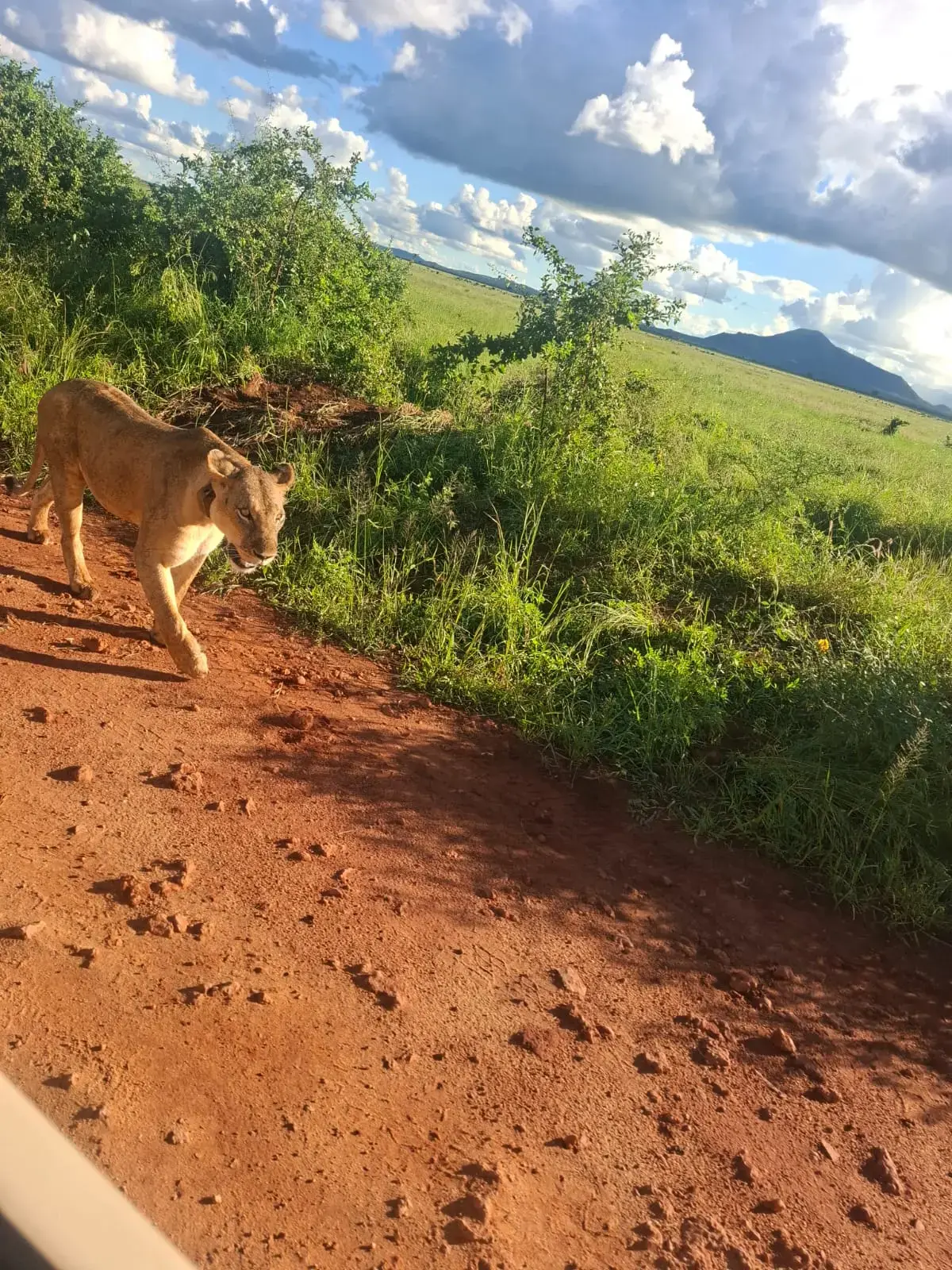
Lions, Leopards and Other Predators
Lions, leopards, cheetahs, spotted hyenas and other predators are recorded in the wider Tsavo landscape. Dense vegetation and rugged terrain can make some sightings more challenging than in more open parks.
No particular predator encounter should be expected; a rewarding safari includes landscape, birdlife and the many smaller observations made along the way.
Black Rhinos and Conservation
Tsavo West is central to Kenya's Eastern black rhino recovery. The sanctuary protects an important population, but rhino sightings remain naturally uncertain and visitor access is subject to conservation management.
Birdwatching
Kenya Wildlife Service reports more than 600 recorded bird species in Tsavo West. Water sources, woodland, savannah and wetlands create opportunities for birds of prey, waterbirds and many other species.
Kenya Wildlife Service reports more than 600 recorded bird species in Tsavo West. Water sources, woodland, savannah and wetlands create opportunities for birds of prey, waterbirds and many other species. Birdwatching need not be limited to a dedicated birding itinerary: patient observation around springs, lake margins and different vegetation zones can add another layer to a game drive. Seasonal conditions influence both which birds are present and how easily they can be observed.
Best Time to Visit Tsavo West
Tsavo West can be visited throughout the year, but the experience changes with rainfall, vegetation and road conditions.
January to February
These are often comparatively dry and warm months. Wildlife may concentrate near reliable water, although heat and dust can be factors.
March to May
The long rains can bring greener scenery and more temporary water. Wildlife may disperse more widely and some roads may be muddy or slow.
June to October
This is generally a drier period often favoured for safari travel. Vegetation may be less dense in some areas, while popular periods can increase accommodation demand.
November to December
The short rains may refresh vegetation and bring changing light and bird activity. Rainfall patterns vary, so current road and travel conditions should be checked.
There is no single best month for every visitor. Travel dates, wider route, wildlife interests and accommodation preferences all matter.
Where to Stay in and Around Tsavo West
Accommodation choice affects comfort, gate access and how much time is available for game drives. Confirm current availability, park-fee arrangements and travel logistics directly before booking.
Established Accommodation Inside Tsavo West
Kilaguni Serena Safari Lodge is listed by KWS among privately operated accommodation within Tsavo West.
Finch Hattons Luxury Safari Camp is within Tsavo West, near the Chyulu Hills.
Severin Safari Camp is inside Tsavo West National Park; it should not be described as outside the park.
Ngulia Safari Lodge is located in Tsavo West on the Ndawe escarpment.
KWS Accommodation and Camping
Kenya Wildlife Service lists Kamboyo Guest House as well as public campsites at Kamboyo, Chyulu and Lake Jipe. KWS also lists special campsites, each requiring separate checks of facilities, access and booking conditions.
Outside or Neighbouring Accommodation
Voyager Ziwani may suit a different route or setting outside the main park area; its precise current location, activities and operating arrangements should be confirmed before it is recommended for a particular itinerary.
Choosing the Right Accommodation
The best option depends on budget, preferred comfort, entry gate, game-drive areas and available nights. Staying inside the park can simplify some routes, while surrounding properties may suit others.
Kenya Safari With Settimo can help travellers discuss suitable options as part of their wider safari planning; formal booking arrangements are handled separately through the relevant licensed operator. Before deciding, it is useful to compare the property’s exact location, gate access, included services, vehicle logistics and the amount of time available inside the park. A camp beside one route may be ideal for a longer circuit but less convenient for a one-night stop, so the choice should support the whole journey rather than a name alone.
Getting to Tsavo West
From Watamu and Malindi
From the northern coast, Tsavo West is often most practical as part of a combined Tsavo East–Tsavo West itinerary. The right route depends on accommodation, gates, road conditions and the time available.
From Mombasa
Travellers from Mombasa can approach through the Nairobi–Mombasa highway corridor, with the appropriate gate chosen according to the planned route.
From Nairobi
KWS identifies Mtito Andei Gate as a principal approach from the Nairobi–Mombasa road. Rail travel to Mtito Andei and planned road transfers may also be considered. Air access may be available through designated airstrips, subject to current flight or charter arrangements.
KWS identifies Mtito Andei, Chyulu, Tsavo River, Lake Jipe, Maktau and Ziwani among access points. Current entry arrangements should be confirmed before travel.
From Amboseli
Chyulu Gate can form part of the connection between Amboseli and Tsavo West within a southern Kenya safari circuit.
How Long Should You Stay?
A short visit can introduce the park, while two or three nights allow more time for different habitats, attractions and game drives. Route planning matters as much as the number of nights.
Avoid trying to include every attraction in a brief itinerary: Tsavo West’s varied terrain is better experienced at a considered pace.
Safari Activities and Practical Visitor Advice
Game drives are the principal way to explore Tsavo West. They may be combined with approved visits to attractions such as Mzima Springs or volcanic landscapes where routing and access allow.
KWS advertises guided walks and night wildlife experiences among park activities. These should be treated as specifically permitted and arranged experiences, rather than unrestricted additions to every safari.
Park Entry and Conservation Fees
KWS manages entry and publishes current conservation fees. Rates can change by visitor category and vehicle charges or particular activities may be separate, so current official information should be checked before travel.
Safety and Responsible Wildlife Viewing
Do not feed, approach or obstruct wildlife. Bring drinking water, sunscreen, insect repellent, a first-aid kit, suitable clothing, footwear, camera and binoculars where useful. A light layer can help during cooler early mornings, while dust protection can be useful in dry conditions. Keep documents, medication and electronics organised for road travel, and follow the guidance of the driver or guide whenever conditions change. Reusable water containers and a small day bag help keep essentials accessible without leaving litter in the park. Mobile coverage, charging points and supplies can vary by route and accommodation, so plan key practical needs before setting out.
Do not feed, approach or obstruct wildlife. Bring drinking water, sunscreen, insect repellent, a first-aid kit, suitable clothing, footwear, camera and binoculars where useful.
Conservation and History
Tsavo West is an important landscape for Eastern black rhino conservation. KWS announced that the expanded Tsavo West Rhino Sanctuary covers approximately 3,200 square kilometres.
The former Ngulia Rhino Sanctuary, approximately 92 km², is historical context rather than the area of the expanded sanctuary. KWS announced the expansion in December 2025 and reported its official launch in September 2026.
The sanctuary’s purpose is long-term protection and recovery. It should not be represented as a guarantee of rhino sightings or an area freely accessible to tourist vehicles.
The region also has railway and First World War history. Railway construction in 1898 and fighting during the East African Campaign are part of Tsavo’s historical context, but the park remains first and foremost a living conservation landscape. Visitors interested in this background can treat it as context for the wider region rather than an alternative to the park’s ecological story. Conservation today also depends on habitat protection, wildlife movement, anti-poaching work and the relationships between protected areas and surrounding communities.
Combining Tsavo West with Other Destinations
Tsavo West and Tsavo East
Tsavo East offers broad open plains, red elephants and the Galana River; Tsavo West adds volcanic hills, woodland, springs and a more topographically varied experience.
Tsavo West and Amboseli
Amboseli brings open plains, wetlands and a Kilimanjaro backdrop. Combining it with Tsavo West highlights the contrast between southern Kenya habitats.
Tsavo East, Tsavo West and Amboseli
For travellers with more time, all three parks can be combined through a considered southern Kenya circuit. Accommodation locations and time for game viewing should guide the route. Rather than treating the parks as a checklist, a well-paced journey allows time to notice the change from Tsavo East’s broad red-earth country to Tsavo West’s volcanic relief and Amboseli’s open wetlands. The practical order depends on arrival point, road conditions, flight or rail connections and the chosen overnight stops.
Safari and Beach Holidays from Watamu or Malindi
A Tsavo West safari can complement time on Kenya’s Indian Ocean coast. It works best when planned around realistic routing and the desired balance between wildlife and beach time.
Frequently Asked Questions
Where is Tsavo West National Park?
Tsavo West is in southeastern Kenya, primarily in Taita-Taveta County, alongside the Nairobi–Mombasa corridor.
What is Tsavo West best known for?
It is known for volcanic landscapes, Mzima Springs, lava flows, wildlife, scenic viewpoints and rhino conservation.
How is Tsavo West different from Tsavo East?
Tsavo West is generally more wooded, hilly and volcanic, while Tsavo East is better known for broad plains, red earth and extensive open country.
Can visitors see rhinos in Tsavo West?
The park is important for black rhino conservation, but sightings are not guaranteed and access is subject to conservation management.
What animals live in Tsavo West?
Recorded wildlife includes elephants, buffalo, lions, leopards, cheetahs, giraffes, zebras, antelopes, black rhinos and many bird species. Sightings vary naturally.
What is the best time to visit?
Conditions vary through the year. The right time depends on travel dates, rainfall, route, accommodation and wildlife interests.
How many nights should visitors spend?
One night can offer an introduction, while two or three nights allow more time for game drives and different parts of the park.
Can Tsavo West be combined with Amboseli or a coastal holiday?
Yes. It can form part of a route with Amboseli, Tsavo East and coastal stays, subject to practical arrangements and available time.
Sources and Further Reading
For authoritative information and further research:
Kenya Wildlife Service — Tsavo West National Park — official park information, accommodation listings, attractions, access points, safety and current conservation fees.
Kenya Wildlife Service — Rhino Sanctuary Expansion — current information on the expanded Tsavo West Rhino Sanctuary.
Kilaguni Serena Safari Lodge · Finch Hattons · Severin Safari Camp · Ngulia Safari Lodge
Plan Your Tsavo West Safari with Settimo
Kenya Safari With Settimo can help visitors discuss suitable routes, accommodation options and travel preferences for Tsavo West, whether it is a stand-alone safari or part of a longer southern Kenya journey.
Explore the 3-Day Tsavo East and Tsavo West Safari or the 4-Day Tsavo East, Tsavo West and Amboseli Safari. You can also browse Safaris & Tours or use Plan My Safari to begin discussing your trip.